
The Wartime Problem
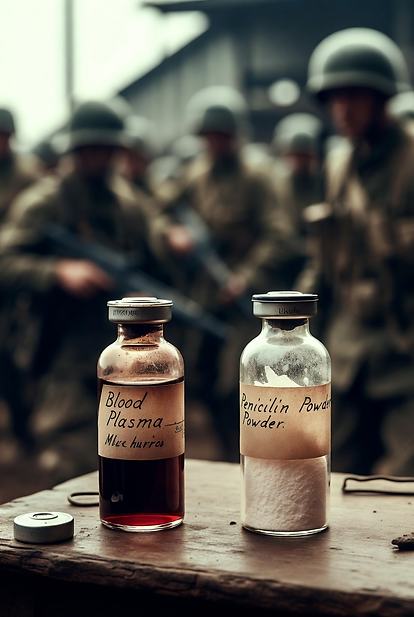
In World War II, two fragile resources stood between life and death on the battlefield: blood plasma for transfusions and penicillin, the new “miracle drug”. Both degraded quickly without refrigeration. Shipping to distant fronts risked failure before arrival.

The Breakthrough
Scientists refined freeze drying (lyophilization) — freezing the material, then removing water as vapor under vacuum. The result was a dry, shelf‑stable powder that could be shipped light and rehydrated at the front with sterile water, maintaining potency when it mattered most.
The product is rapidly frozen to lock structure and biological activity
WWII Timeline: From Lab to Lifeline
-
1939–1941: Researchers test low‑temperature drying to stabilize fragile biologicals.
-
1942: Scalable protocols for plasma demonstrated; logistics pathways formed for battlefield use.
-
1943: Freeze‑dried plasma deployed widely; penicillin stabilization and distribution accelerate.
-
1944–1945: Field survival improves as stabilized supplies reach remote fronts; foundations set for post‑war pharmaceutical lyophilization.
Lightweight Logistics
Dry vials replaced heavy ice chests—faster, safer, farther.
Rapid Reconstitution
Rehydrate with sterile water and use within minutes near the front lines.
Reliable Potency
Stability without continuous refrigeration increased availability where it mattered most.
“Freeze drying turned fragile, perishable medicines into dependable frontline supplies.”